
SOP: How to Conduct Market Research
Market Research for a Childcare Program
Department
Administration / Leadership / Enrollment / Business Development
Person Responsible
Center Director, Owner, Administrator, or Assigned Leadership Team Member
Frequency
Complete market research:
- Before opening a new childcare location
- Before changing tuition prices
- Before launching a new program
- Once per year as part of strategic planning
- When enrollment drops or competition increases
Step 1: Define the Purpose of the Market Research
Before collecting information, clarify why the research is being conducted.
Examples:
- To determine tuition pricing
- To understand competitor offerings
- To identify gaps in the local market
- To improve enrollment strategy
- To define the school’s brand position
- To decide whether a new location or program is viable
Expected outcome:
A clear research goal that guides what information will be collected.
Step 2: Identify Local Competitors
Create a list of at least three direct competitors within the local market area.
Competitors may include:
- Childcare centers
- Preschools
- Montessori schools
- Faith-based programs
- Home-based childcare providers
- After-school programs
- Franchise childcare brands
Collect the following information for each competitor:
- Name of program
- Location
- Age groups served
- Tuition prices
- Licensed capacity
- Waiting list status
- Program quality
- Type of competitor
- Facility condition or construction quality
Administrator Tip:
Visit websites, call as a prospective parent, review online listings, and observe public-facing information.
Step 3: Create a Competitor Price Monitoring Grid
Use a grid to compare tuition by age group.
Include:
| Age Group | Competitor 1 | Competitor 2 | Competitor 3 |
|---|---|---|---|
| Infants | |||
| Young Toddlers | |||
| Toddlers | |||
| Preschoolers | |||
| Pre-Kindergarten | |||
| After-School Children | |||
| Licensed Capacity | |||
| Waiting List |
Expected outcome:
Leadership can clearly see the market pricing range and where the school fits.
Step 4: Analyze the Competitive Landscape
Review each competitor beyond pricing. Price alone does not determine value.
Use this chart:
| Competitor | Location | Construction / Facility | Prices | Quality | Licensed Capacity | Type of Competitor |
|---|---|---|---|---|---|---|
Look for:
- Which programs are premium-priced?
- Which programs are budget-friendly?
- Which programs have strong facilities?
- Which programs have stronger branding?
- Which programs appear full or have waiting lists?
- Which programs offer services parents may want?
Step 5: Conduct a SWOT or SWOP Analysis
Review your own school and competitors using the following categories:
| Competitor / Program | Strengths | Weaknesses | Opportunities | Threats |
|---|---|---|---|---|
| Your School | ||||
| Competitor 1 | ||||
| Competitor 2 | ||||
| Competitor 3 |
Definitions
Strengths:
What your school does well.
Weaknesses:
Areas that need improvement.
Opportunities:
Services, programs, or advantages your school can develop.
Threats:
External challenges such as new competitors, lower pricing, or changing family needs.
Expected outcome:
Leadership can identify how to position the school in the market.
Step 6: Conduct a Parent Market Survey
Keep the survey short and simple so families are more likely to answer.
Suggested questions:
- How much do you currently pay for childcare?
- Can you recommend a good childcare program? Why do you like it?
- Do you currently need childcare services?
- What type of childcare do you need: full-time, part-time, or half-day?
- What matters most when choosing a provider: safety, curriculum, teachers, low ratios, location, or price?
- How much are you willing to pay for childcare services?
Survey options:
- Google Form
- Paper form
- Phone calls
- Parent interviews
- Community Facebook groups
- Local family events
- Enrollment tours
Expected outcome:
Leadership understands what families value and what they are willing to pay.
Step 7: Review Local Demographics
Collect basic demographic information for the area surrounding the school.
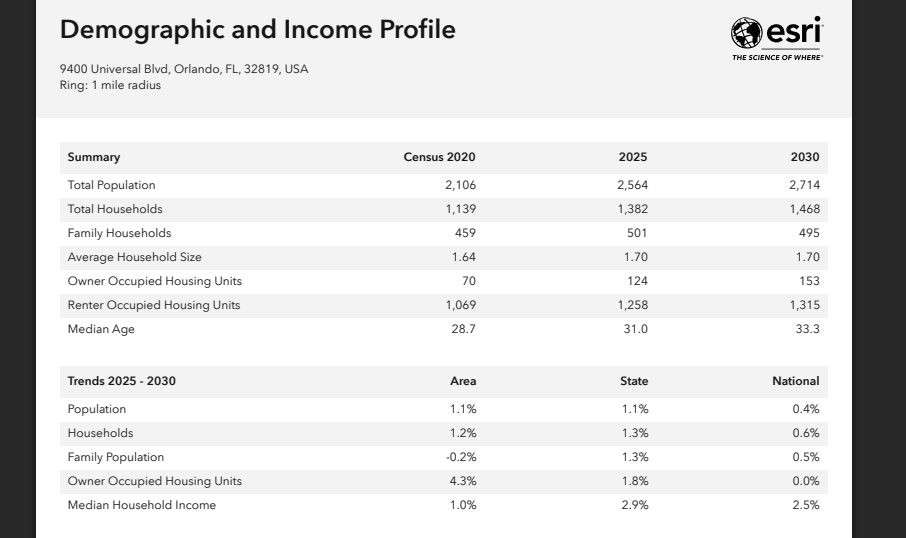
Recommended radius:
- 1 mile
- 3 miles
- 5 miles
Collect:
| Demographic Area | Information |
|---|---|
| Total population within 3 miles | |
| Average age | |
| Number of children ages 0–5 | |
| Median household income | |
| Market growth | |
| Number of working families | |
| Nearby employers | |
| Nearby housing developments |
Pricing assumption from workbook:
Parents may pay an average of approximately 10% of total median household income toward childcare expenses.
Use this as a guide, not the only pricing method.
Step 8: Determine Your Brand Positioning Statement
Using the information from the SWOT analysis and survey results, define how your school should be positioned.
Ask:
- What makes our program different?
- What do parents value most?
- What strengths do we already have?
- What market need can we solve?
- Are we a premium, mid-market, or value-based program?
Brand Positioning Template
For families who need ____________________,
our school provides ____________________,
because we offer ____________________,
unlike competitors who ____________________.
Example
For families who want more than basic childcare, our school provides a creative, curriculum-rich early learning experience because we combine safety, strong teacher training, project-based learning, and family communication in a warm environment.
Step 9: Determine Recommended Pricing
Use three sources to guide pricing:
- Competitor tuition rates
- Parent survey responses
- Local demographic and income data
Then determine:
| Age Group | Recommended Weekly Tuition | Notes |
|---|---|---|
| Infants | ||
| Toddlers | ||
| Preschoolers | ||
| Pre-K | ||
| After-School |
Consider:
- Staff-child ratios
- Teacher wages
- Rent or mortgage
- Food costs
- Curriculum costs
- Supplies
- Insurance
- Profit margin
- Competitor rates
- Parent expectations
Important:
Do not price only to be cheaper than competitors. Price according to quality, cost, value, and sustainability.
Step 10: Prepare a Market Research Summary
Create a one-page summary for leadership.
Include:
- Research purpose
- Main competitors
- Pricing comparison
- Parent needs
- Market opportunities
- Threats
- Recommended brand position
- Recommended pricing
- Action steps
Summary Format
Market Research Summary
Location:
Date Completed:
Completed By:
Top Competitors:
1.
2.
3.
Key Findings:
Parent Needs Identified:
Opportunities:
Threats:
Recommended Positioning:
Recommended Pricing:
Next Steps:
Quality Checklist
Before the market research is considered complete, confirm:
- Competitor pricing has been collected.
- At least three competitors were reviewed.
- Local demographic information was reviewed.
- Parent survey responses were collected.
- SWOT/SWOP analysis was completed.
- Brand positioning statement was created.
- Tuition recommendation was prepared.
- Findings were shared with leadership.
- Final document was saved in the school’s business planning folder.
Final Administrator Expectation
The administrator should not only collect information but also interpret what the information means. Market research should help the leadership team make better decisions about pricing, enrollment, branding, services, and long-term sustainability.